
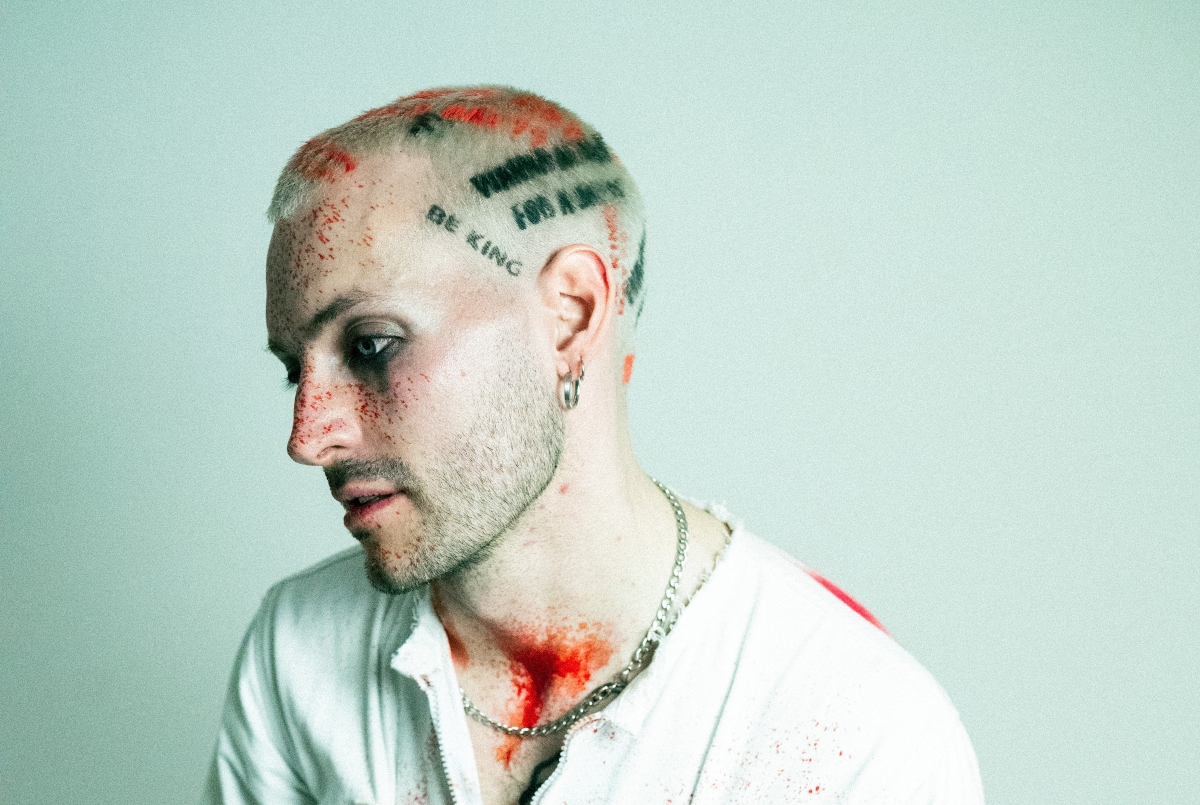
(Mazare / Image credit: Tiziana Moccia)
Mazare, the Italian producer born and raised in Northeast Italy, is electrifying the global scene with his genre-defying sound that masterfully fuses heavy-hitting metal-electronic hybrids and emotional pop-rock-infused tracks, drawing inspiration from icons like The Prodigy, Noisia, and Bring Me The Horizon. Since his debut, he has earned widespread support from industry titans including SLANDER, Illenium, Seven Lions, Said The Sky, Dabin, Koven, and Don Diablo, while consistently releasing through powerhouse labels Monstercat and Insomniac Records, racking up more than 35 million Spotify streams and captivating fans with his high-energy live performances and relentlessly positive vibe.
His latest release, the fiery collaboration with Brighton-based rising brat metal band EVILLE on ‘King For A Day’ (released 22 May via Universal Music Italy), explodes with Jersey club kicks, distorted guitars, breakbeat drums, looming Reese basses, and a show-stopping vocal from EVILLE frontwoman Eva Sheldrake paired with Mazare’s own raw rap verse that perfectly captures the track’s urgent message about today’s geopolitical tensions.
In this exclusive interview, Mazare dives deep into the making of ‘King For A Day’, his creative process, and what’s next on the horizon.
Stream King For A Day ft EVILLE:
What is your Primary Role(s) in Electronic Music? For Example, are you a DJ, vocalist, producer etc.
I am a producer, dj, musician and songwriter.
What is your preferred main electronic music genre/style, and what makes you resonate with it?
Speaking of electronic music, I’d go with drum and bass and breakbeat. They have a lot of things in common with metal (fast paced, high energy and complex drum patterns) which is my favorite genre outside of dance music.
How many years have you been actively creating or performing electronic music?
I started dabbling in it in 2014, but the modern Mazare sound began in 2019 with my first release on Monstercat, “Where Do We Go“.
Describe your typical studio/production workflow (e.g., hardware vs. software focus, favorite gear, creative starting point).
I transformed a corner of my living room into a small studio. I work mainly in the box (you can do miracles on a modern MacBook Pro) but usually record guitars and bass the old way!
Which major music platform (Spotify, Apple Music, Bandcamp, Soundcloud, etc.) generates the most engagement for your work?
I’d say Spotify, we’ve had a few good playlist placements through the years and that contributed a lot to building a fanbase on that platform.
Do you prefer performing Live Sets (using hardware/controllers to manipulate sound) or DJ Sets (mixing tracks)? Why?
For now I’m doing only DJ sets, but the goal is to gradually move towards a full live performance. My sound has shifted towards something more instrument-driven and I’d love to bring that on stage one day.
What’s one underrated production skill you wish more electronic artists focused on?
Songwriting. I feel like everyone is a bit too focused on sound design, which can be a bit of an end in itself. I always very much prefer an interesting arrangement over a super clean and pristine production.
Do you see AI as a threat to musicians, a helpful collaborator, or something else? How do you plan to keep your music relevant as the industry changes rapidly because of these tools? By embracing AI, avoiding it, or taking a different approach?
I have very strong opinions about AI in art in general, but let’s just say it’s not for me. I write music because I enjoy the process, the learning, the trial and error, the problem solving. All these get taken away with AI and what’s left are just hollow caricatures of actual art. It can be a great tool in other aspects of an artist’s work, but the creative side is sacred. I think people will quickly get tired of AI slop and will be on the lookout for human-made entertainment. I’ll just keep doing what I do until that hopefully happens.
If you are a producer, how often do you utilize generative AI tools (e.g., for mastering, sample generation, synth patching, etc.) in your current process?
Never.
What is the single biggest challenge facing electronic music artists in the next 5 years?
I think the biggest challenge is and will be cutting through the noise. Making music has become more and more accessible, also thanks to AI tools, tons of new songs are released every single day, so creating a space for your art can be tough. But it’s also much more rewarding.
What’s the toughest technical or industry obstacle you’ve faced as an electronic artist?
I’d say right now it’s understanding how to market yourself on social media. There’s so much content everywhere, and as previously mentioned cutting through it has become increasingly difficult.
How has growing success or attention changed the way you produce, perform, or share your music?
Fortunately, it hasn’t! I have a pretty open-minded fanbase, and they are used to me switching genres and trying out new things. If anything, the more I grow, the more I feel compelled to experiment and explore!
What’s your current favorite piece of electronic gear or plugin that you can’t stop playing with in the studio?
I am absolutely in love with everything by Neural DSP. They mainly make amp simulators, but have a few great mix/mastering plugins specifically aimed at metal producers. Absolutely recommended!
How do you handle the constant pressure to chase viral sounds while still staying true to your own vision? Even if my favorite genre is metal, I’ve always had a soft spot for pop music, so I’ve always wanted my sound to be authentic but “catchy” in a way. So now I’m just doubling down on the hooks ahah!
Watch the Music Video:
Follow Mazare:
Instagram – Facebook – X – Soundcloud – TikTok – Youtube – Spotify